

AOMC News
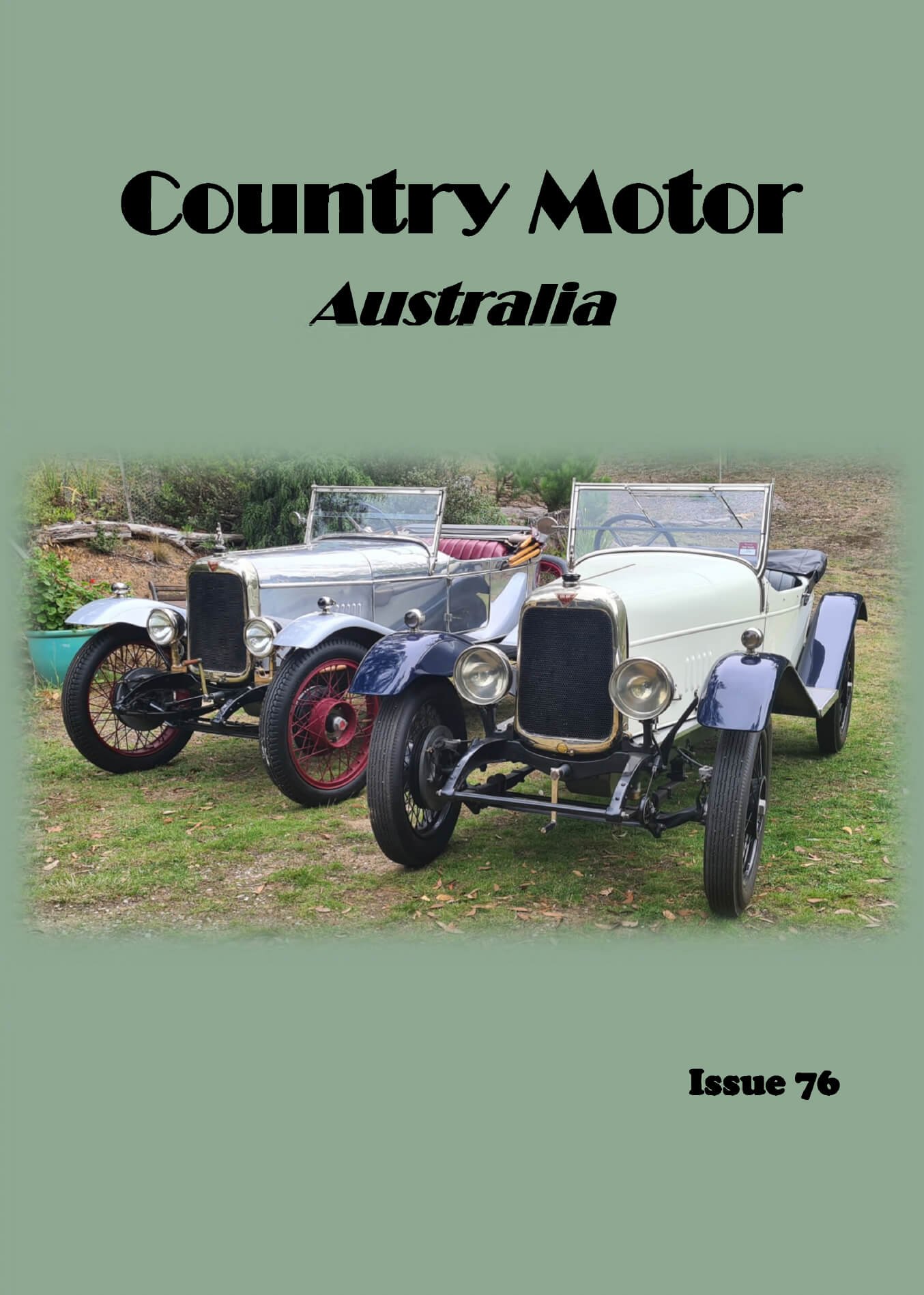
Country Motor - Issue 76
Country Motor is a E-magazine created for and by country motor enthusiasts who have passion for ancient motor vehicles, engines, in fact any motor that is curious and old.

An information paper on road potholes and repairs
Potholes are a persistent problem on roads, primarily caused by water seeping into cracks in the road surface, weakening the underlying structure and leading to rapid collapse, especially in areas with poor drainage or substandard construction. Learn more from author, Lawrence Glynn who covers history of potholes, the why’s and what to do.
Some history
Potholes have been a scourge for thousands of years. The word “pot” comes from Middle English meaning deep pit, hollow or vessel. The term “pothole” was first applied (as far as we know) to holes in sealed roads about as soon as sealed roads became common, around 1909.
Unsealed roads were nearly always rough and pockmarked with holes and gullies making for uncomfortable travel at even horse drawn speeds.
In 1816 a dramatic improvement in roads was brought about by Scottish civil engineer John McAdam who perfected a road base made from layers of successively finer sharp-edged stones which interlocked with each other to make a stable and durable road base. The top surface was prone to damage from traffic lifting the small stones and the entire structure was weakened by water filtering down and softening, or washing away, the sub soil. Good drainage was an essential element. Not much has changed since.
A seemingly ideal solution to these two issues came later, and used tar to seal the surface, greatly reducing surface wear and water ingress. This “tarred McAdam”, or tarmac for short, did not catch on whilst horses were the predominate motive power as their hooves dug up the relatively soft tar.
But once rubber tyred motorised transport caught on tarmac roads became the way to go, although tar was replaced with better tar like materials by then.
Where do potholes come from?
In many cases they seemingly come from nowhere and quite rapidly. They can literally form before your eyes in minutes.
One cause of potholes is when the road base is not supported and is unable to bridge the soft or voided area below it, causing a section of road to drop and the upper surface to form a dip or a bowl, which then gets bigger. You will see this when trenches have been dug across roads and not properly backfilled and compacted but it can happen when the sub soil is too weak or there is water flowing or pooling under the road.
The most common reason is water entering the road structure from above.
The first step is cracking in the top surface. This may be fatigue cracks because the structure is not stiff enough, which is a design and construction issue. It may be because the asphalt surface is old and “drying up” and becoming brittle or because of repeated thermal expansion and contraction.
Once there is a crack in the wearing surface water can seep into the structure, eventually softening the subsoil and causing the structure to collapse.
As the surface cracks chunks get lifted up, more water gets in, causing surface water to pool which increases the water going into the structure and hastening the damage. At some point a catastrophic collapse can occur turning a shallow puddle into a sizable pothole in minutes. A mini sink hole.
Potholes are most likely in the wheel tracks, which is inconvenient, or at the road shoulders where the road structure and drainage does not extend far enough away from the road surface’s edge, as often happens when the road has been widened a little without a full rebuild.
How to stop potholes
The first line of defence is in the road design and construction. Drainage, soil types, camber, expected usage, local geology and material choice are all vital. As is building it to the design! Trying
to save money at this stage will cost plenty later on. Often the budget does not extend to the highest standard. Concrete roads are great but expensive.
Sealing cracks early is a major preventative tool, which is why you often see wriggly black lines of tar on roads, local roads in particular. This is a costly process, but effective if done early. Re-sealing roads before the surface gets aged is another great preventative measure but even more expensive.
Drainage and water flows over, around, and under the road also need routine inspection and correction as required.
Much of the damage is unseen until it is suddenly exposed as a pothole, but (expensive) ground penetrating radar can “see” what is going on below the surface allowing rebuilding of the road structure before it all collapses.
Why is this not done?
The short answer is money. There is just not enough money allocated.
Australia’s roads are maintained by three levels of government. Federal roads (national highways) are funded by Federal government with the work sub-contracted to the States and Territories. State roads are funded by the States (used to be VicRoads in Victoria) and local roads by your local shire council.
None of these levels have endless funds for road building and repair. Any extra spent on roads means something else has to go without.
Road building and road maintenance are usually two different parts of the budget (capital and recurring respectively) and rarely is there any transfer of the savings made during building to pay for the inevitable extra repairs later.
Almost always, a pothole is not repaired by filling it with cold mix, it is just a problem put off. But that is often all that can be done quickly and within the budget. To dig out and repair the road structure, perhaps fixing the drainage issue or structural inadequacy which caused the pothole in the first place, takes longer and costs a lot more. One pothole fixed properly, 10 left untouched.
Will the current pandemic of potholes be fixed soon?
Probably not. NSW are still catching up 6 years after a similar experience.
The culmination of many years, possibly decades, of inadequate repair budgets will take a long time and about 3 times current funding to fix. “Cost efficient” road building in the past will add to the repair costs in the future as those roads start to crumble prematurely. Above average rain falls places stress on the road drainage and exploits any surface cracks. Prolonged dry spells after all this rain may cause further damage as the subsoil shrinks.
Does size matter?
Road structure damage rises with the 4th power of axle mass – double the mass means 16 times the damage. If a typical passenger car with an axle mass of 850 kg does 1 unit of damage, a larger heavier car (say a modern ute or EV) with an axle mass of 1300 kg will do 5.4 units of damage but a truck axle at 8.5 tonnes will do 10,000 units of damage. So, no, a bit of extra weight in a passenger car is not an issue to the structure.
The road surface can wear a little faster with heavier vehicles but the main concern here is scrubbing the surface during corning at roundabouts etc.
What can we do now?
Our habit of voting for whichever party promises to tax less and spend less in government, at whichever level, probably does not help. Any increase in road expenditure will probably mean other budget/service items getting less money and they may be more important.
A dedicated road repair levy (of which we already have two but neither are dedicated to road repairs now!) of about $0.04 per km, or $0.40 per litre of fuel, or $600 per vehicle per year, would finance the repairs.
Reporting patches of broken asphalt before they become potholes can help, as may keeping pressure on your local representative (of the relevant government level) to address the road damage in your area. They are probably well aware of the issue but constant reminders may work.
Driver Safety
Leaving a longer gap between vehicles to allow time to spot and react to a pothole would certainly help reduce the damage. As does watching the behaviour of the vehicle in front for sudden movements which may indicate hitting or dodging a pothole.
The views in this paper are those of the author, Lawrence Glynn, and may not align with those of the AOMC.
Download a printable version of this article.
Forward Look at Per Kilometre Road User Charging
With the rise of electric vehicle ownership governments are turning their attention to recovering the loss of fuel excise duty levied on every litre of petrol and diesel sold in Australia for use in road transport.
This paper seeks to outline what actions may be taken by governments in this regard, what implications this may have for the motoring enthusiast movement, if any, and, what action, if any, the AOMC should take.
This is a discussion paper and represents the AOMC looking forward at issues that may impact the movement, our clubs and their members. We invite you to read, consider and provide feedback as it is essential that the AOMC has a seat at the table for any said discussions with the regulators and decision makers. We do not want to be an unintended consequence of a new régime.
With the rise of electric vehicle ownership governments are turning their attention to recovering the loss of fuel excise duty levied on every litre of petrol and diesel sold in Australia for use in road transport.
This paper seeks to outline what actions may be taken by governments in this regard, what implications this may have for the motoring enthusiast movement, if any, and, what action, if any, the AOMC should take.
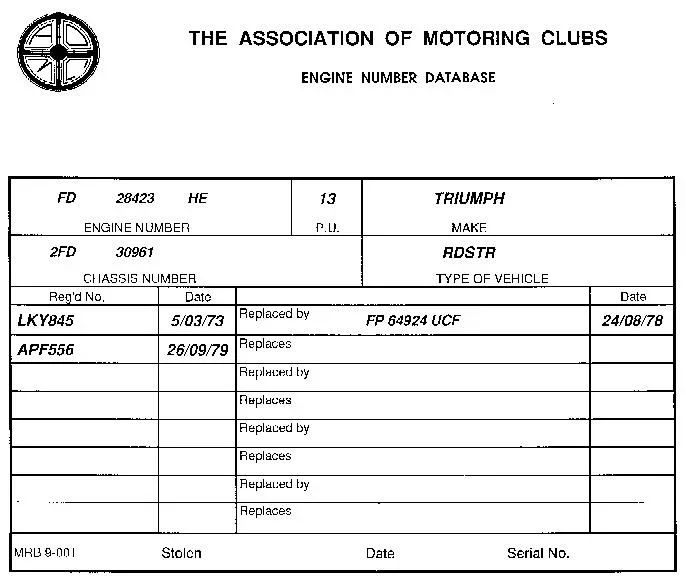
Engine Record Search Update
The AOMC's newly appointed Archivist, Andrew Alkemade, tells us about the AOMC Engine Number, Registration Number and Spring Specification Search service, and some of the changes made to keep them moving forward.
As indicated at the last Delegate’s meeting Philip Johnstone has stepped back after 25 years of extraordinary and valuable service providing engine record information to enthusiasts, clubs and historians.
I have taken on the role supported by Peter Truman with a number of part time volunteers. I have been an AOMC delegate for 8 years. I have also been a member of a number of Holden car clubs and filled various committee positions and keen to assist enthusiasts and support the motoring environment.
The Engine Record Search service has been enhanced to capture requests, responses and supporting documentation and ensure these are preserved and accessible within a multi user environment. Various single make databases are being converted and tools will be available to clubs who wish to expand these resources.
We have also made available a library of suspension spring specifications for a range of vintage, veteran and classic vehicles.
The website menus have also been enhanced to make it easier to find the service for members and non members alike. Select the new Services tab to access Engine and Registration Searches or Spring Specification Search
The costs are as follows:-
- $90 for 1933 to 1984 vehicles
- $115 for Vintage and Veteran vehicles
- $60 for suspension spring specifications.
- Single make or additional services determined by request.
To make a request please use the following link
Following receipt of the request, the AOMC Office will issue an invoice for the appropriate search and the search team will be in contact. A formal report will be issued whether the search is successful or otherwise.
A special thanks to Philip for the service he provided over the past 25 years and in the effective handover to me so the team can continue to share this valuable resource with enthusiasts and their clubs
The Engine Records Search team can be contacted via email archive@aomc.asn.au or office@aomc.asn.au. or Phone 03 9558 4829
Regards, Andrew Alkemade
AOMC Archivist

AOMC MembershipPLUS Insurance Program 2026
The AOMC MembershipPLUS program is now in it’s second year and includes the same comprehensive range of insurance covers for car clubs that are much more affordable for all clubs, but especially for smaller clubs.
But even better is the news that the price remains unchanged for 2026/27.

The AOMC has been working closely with its insurance broker, Affinity Insurance Brokers, to finalize the renewal of policies that underwrite the AOMC MembershipPLUS affiliation program, and is pleased to announce that the program will continue into 2026/27 with the same policies and benefits and, importantly for Clubs, with the same low fees as last year. This is a considerable achievement in an environment where price increases seem to be the norm.
The underwriters have recognised the excellent work that the AOMC and its member clubs have done to transition towards the improved risk management strategies that underpin this specialised low cost group insurance scheme for motoring clubs, and have asked for that same effort to continue, to ensure all clubs reach the standards needed for the scheme to succeed, and be fair and equitable for all participating clubs.
The AOMC will therefore continue to work with affiliated members to ensure all clubs wanting to join the scheme complete the transition successfully, and to ensure all clubs have a well functioning risk management program.
Business and Apprentice Support Grants
Applications are now open for 2026 AOMC Business and Apprentice Support Grants
Applications are now open for the 2026 grants.
The AOMC recognises the importance of trades and specialist suppliers that enable the historic and enthusiast movement to maintain our club and enthusiast vehicles. We consider many of these movable pieces of cultural heritage and we have a small amount in our budget for support of apprentices and businesses dedicated to this area.
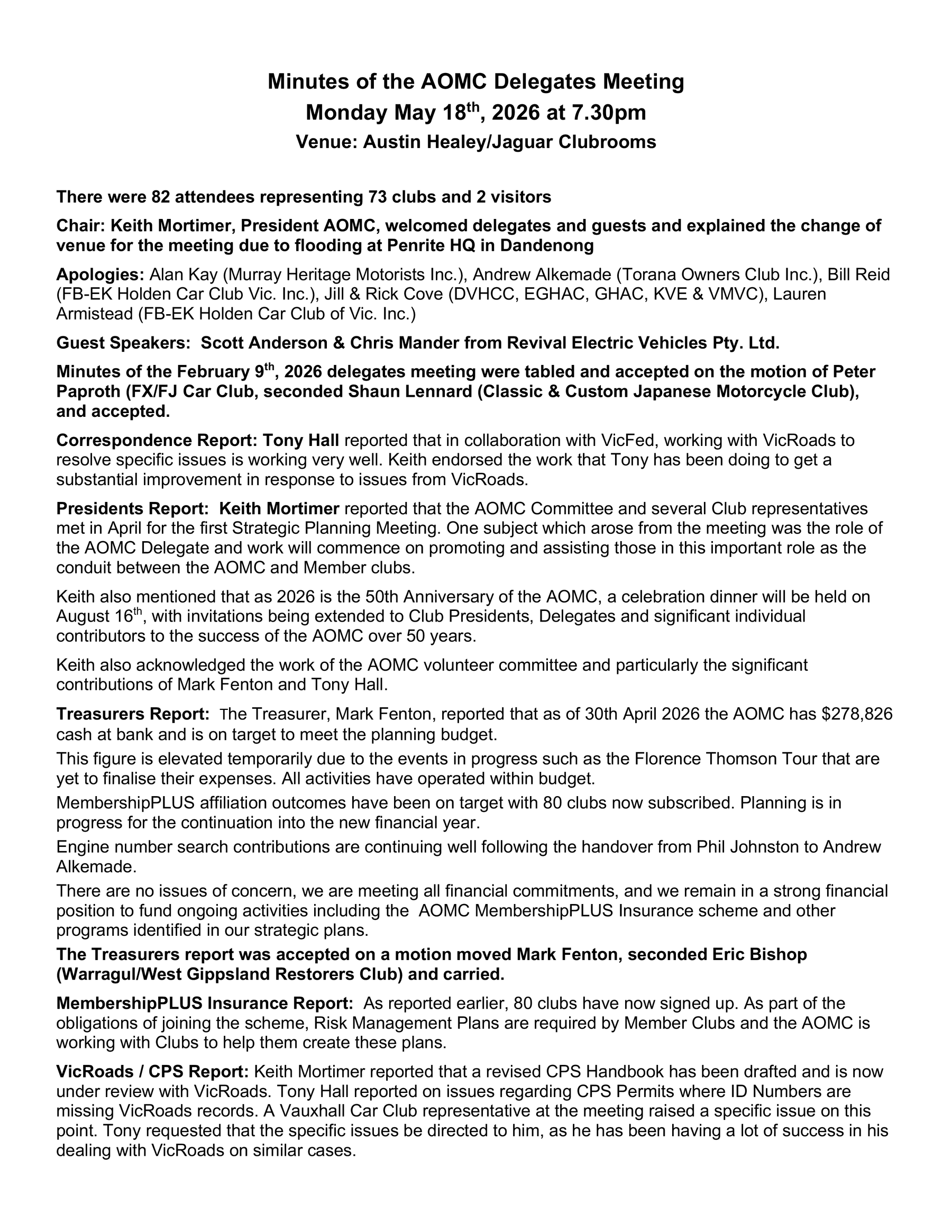
Minutes for the May Delegates Meeting
There were 82 attendees representing 73 clubs and 2 visitors. Chair: Keith Mortimer, President AOMC
There were 82 attendees representing 73 clubs and 2 visitors. Chair: Keith Mortimer, President AOMC, welcomed delegates and guests and explained the change of venue for the meeting due to flooding at Penrite HQ in Dandenong.

Country Motor - Issue 74
Country Motor is a E-magazine created for and by country motor enthusiasts who have passion for ancient motor vehicles, engines, in fact any motor that is curious and old.

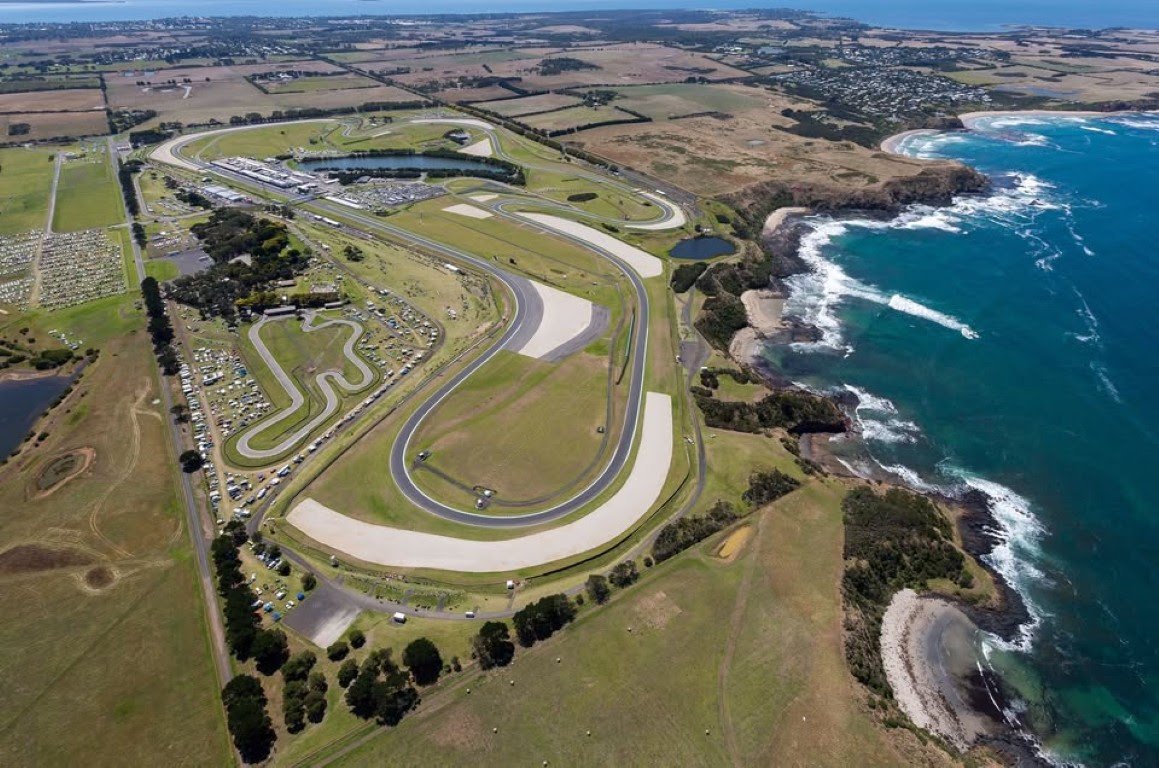
Phillip Island Festival of Motorsport Proposal
Signing the petition: The MotoGP on Phillip Island, like other 'mobile' events, was always at risk. The establishment and growth of a new 'home-grown' major event for Phillip Island, that cannot be taken away, will further underpin regional tourism and economic benefits for the long term.
The MotoGP on Phillip Island, like other 'mobile' events, was always at
risk. The establishment and growth of a new 'home-grown' major event for
Phillip Island, that cannot be taken away, will further underpin regional
tourism and economic benefits for the long term.
Jeff Floyd AM, former CEO of Tourism Victoria, and Darian Misko, former
General Manager Commercial at the Australian Grand Prix Corporation, have put together an exciting proposal for a week-long 'carnival' of motoring on Phillip Island to replace the MotoGP.
This proposal has been strongly supported by the leaders of a number of key
groups on the island and the Bass Coast Shire Council; it is with the
Minister for Tourism for his endorsement and funding support. The AOMC has
added its support in principle and has agreed to join a working party to
develop the idea further.
The key to success will be to develop a multi-day event with sound
underpinnings - building on Phillip Island's existing strength in
motorsport, but also, with a number of other elements such as classic
motoring and motorcycling, music, food, wine, entertainment - which
leverage off the island's existing businesses.
No destination in Australia has brought together a single world-leading
broad motoring festival which incorporates cars, motorbikes and other
classic vehicles, major rallies to the event, show 'n' shine displays,
heritage motor racing, a swap-meet, car club events, music, food, wine and
classic fashions.
This proposal needs the urgent backing and financial support of the State
government.
Please ask your members to add their support for this great initiative by
signing the petition

RACV Total Care Update For Historic Vehicle Owners
RACV has recently updated its Total Care roadside assistance offering which may affect classic and historic vehicle owners.
RACV has recently updated its Total Care roadside assistance offering which may affect classic and historic vehicle owners.
To clarify the changes, AOMC representatives Keith Mortimer and Howard Billing attended a roundtable briefing with RACV, where the revised scheme was explained in detail. A copy of RACV’s presentation has been provided and is now available here for members seeking further information.
As of April 2026, RACV Total Care remains a premium roadside assistance package with several key inclusions:
Towing coverage: Up to 100 km in both metropolitan and regional areas
Remote breakdown support: Up to $2,400 for accommodation, transport, or rental vehicle costs when more than 100 km from home
Vehicle eligibility: Covers electric, petrol, diesel vehicles, as well as caravans and trailers
Multi-vehicle flexibility: Ability to nominate up to five vehicles under one membership, including shared driver access
Additional services: Assistance for flat batteries, tyre issues, and lockouts
AOMC encourages members to review the updated information carefully to understand how the changes may apply to their vehicles and usage.